April 30, 2025 | Chris Lema
When Different People Do the Same Job, Magic Happens
Your Best Performers Don't Look Alike for a Reason Every organization has them – those standout performers who consistently deliver exceptional results but approach their work in completely different ways. Like musicians covering the same song, they hit all the required notes but express them through their unique style. What if these differences aren't problems...
Your Best Performers Don't Look Alike for a Reason
Every organization has them – those standout performers who consistently deliver exceptional results but approach their work in completely different ways. Like musicians covering the same song, they hit all the required notes but express them through their unique style. What if these differences aren't problems to fix but strengths to leverage?
One Job Description, Eight Natural Approaches
Behind every standardized job description lies an opportunity for diverse expression. Consider how different motivational dimensions naturally approach the same responsibilities:
- A project manager with an Achiever dimension sets exceptional standards and strives for distinction in every deliverable.
- Their Driver colleague attacks obstacles with remarkable tenacity, keeping projects moving forward at all costs.
- The Relator project manager builds powerful cross-functional relationships that smooth implementation challenges.
- And the Optimizer continuously refines processes for greater efficiency.
These aren't different roles—they're different expressions of the same role through unique motivational lenses.
Why Your Standardization Efforts Keep Failing
When we insist everyone follow identical processes, we create a fundamental disconnect between work and natural motivation. This misalignment doesn't just affect satisfaction—it dramatically impacts performance.
Research shows that employees working primarily in their motivational sweet spot demonstrate 37% higher performance ratings than those working predominantly outside their natural pattern. This performance differential doesn't reflect differences in capability but how effectively natural motivation gets channeled into productive work.
The Cover Song Effect: Different Artists, Same Song
Think about how musicians transform songs when they cover them. When Johnny Cash covered Nine Inch Nails' "Hurt," he transformed an industrial rock anthem into a haunting reflection on mortality. Aretha Franklin took Otis Redding's "Respect" and turned it into an empowering feminist anthem. Same notes, same lyrics, but completely different expressions that showcase each artist's unique gifts.
Your team members are no different. Each brings their distinctive motivational pattern to the work, interpreting your "standard operating procedures" through their unique lens. The question isn't whether they'll do this—they will, either openly or beneath the surface—but whether you'll create an environment that harnesses these differences as strengths.
The Cost of Forcing Everyone Into the Same Mold
The consequences of motivational misalignment extend beyond individual performance to team dynamics and organizational health. Organizations that rigidly enforce standardized approaches often experience increased voluntary turnover, particularly among high performers with unique approaches.
Innovation suffers as standardization suppresses diverse problem-solving approaches, while burnout rates climb from the constant energy drain of working against natural patterns. Perhaps most concerning, team diversity weakens as hiring unconsciously favors those who fit the "standard" profile.
Most organizations don't create these problems intentionally—they emerge from well-meaning attempts to create consistency and predictability.
Redesigning Work to Leverage Natural Strengths
The alternative approach focuses on outcomes while providing flexibility in process. Start by defining what success looks like through clear goals and standards without prescribing exactly how to achieve them. Recognize that team members may take diverse routes to the same destination, and help each person find their natural way of excelling within role parameters. Focus performance measures on outcomes rather than adherence to standardized processes.
This flexibility doesn't mean abandoning structure—it means creating frameworks that accommodate motivational diversity while ensuring consistent results.
From Standardized Processes to Motivational Alignment
Making this shift requires specific practices that honor diversity while maintaining necessary coordination. Use MCode assessments to identify each team member's unique motivational pattern and observe how different team members already express their distinct approaches. Help each person articulate how they'll approach key responsibilities through their natural motivational lens.
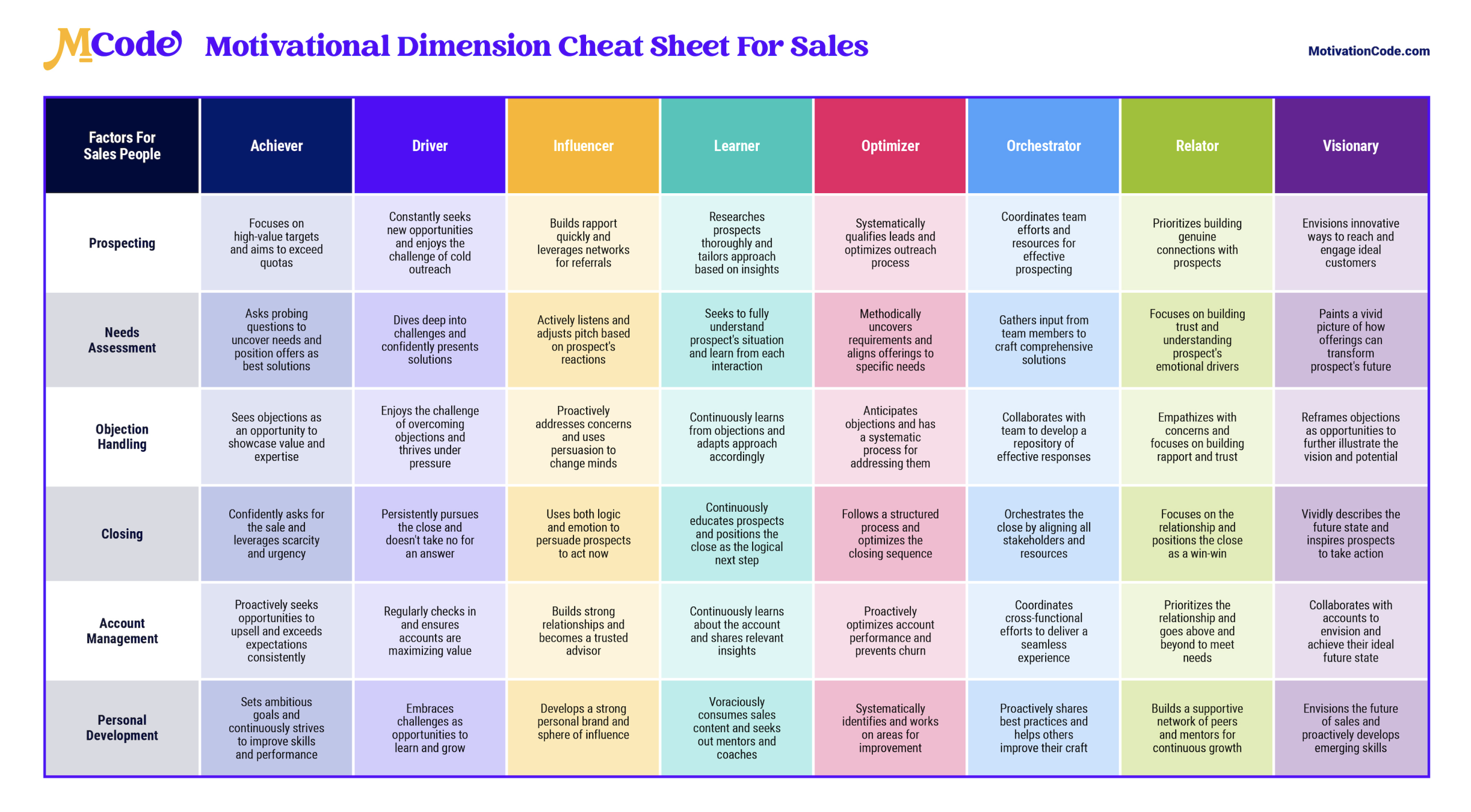
Creating cross-dimensional partnerships can be particularly powerful, pairing team members with complementary motivational strengths. For example, an Optimizer's process refinement skills might perfectly complement a Visionary's innovative approaches. Together, they create results neither could achieve alone.
Feedback also needs dimensional consideration. An Achiever thrives on recognition for excellence and standout performance, while a Relator responds most powerfully to acknowledgment of their team contributions and relationship-building. Tailoring your guidance to each person's motivational pattern transforms feedback from generic oversight to targeted development that resonates deeply.
How Leading Organizations Leverage Motivational Diversity
Organizations embracing motivational diversity consistently outperform those enforcing standardization:
Companies focusing on motivation-driven approaches report significantly higher employee engagement, reduced turnover, and improved performance. Research indicates organizations implementing comprehensive MCode-based leadership approaches experience 8% higher overall performance and substantial improvements in recruitment efficiency, employee retention, and productivity.
Your Path to Unlocking Hidden Performance
Start your journey toward motivation-based work design with these practical steps:
- Map your team's motivational landscape to identify the diverse dimensions and patterns currently present
- Create permission for authentic expression by explicitly valuing different pathways to excellence
- Design flexibility into expectations by framing requirements around outcomes rather than prescribed methods
- Celebrate diverse successes by recognizing exceptional performance expressed through different dimensions
- Review processes to distinguish between essential consistency and areas where flexibility enhances results
By embracing the natural diversity in how people approach their work—allowing each person to "cover" their job in their unique style—you create an environment where everyone contributes at their highest level, not by becoming more alike, but by becoming more authentically themselves.
A story. An insight. A bite-sized way to help.
Get every article directly in your inbox every other day.
I won't send you spam. And I won't sell your name. Unsubscribe at any time.
About the Author
Chris Lema has spent twenty-five years in tech leadership, product development, and coaching. He builds AI-powered tools that help experts package what they know, build authority, and create programs people pay for. He writes about AI, leadership, and motivation.